Sunday, April 3, 2016

Universal Force Powers: Bind, Enhance, Heal/Harm Another, Influence, Misdirection


Bind (Universal Force Power)

◊Descriptors – The Force, mental, telekinetic
◊Effect – Ranged Affliction • 2 points per rank +1

Power Name (ranged subtle Affliction)

◊Modifiers – ranged: +1/rank, subtle: 1 flat point
◊Action – standard
◊Requirement – ranged attack check
◊Range – S/M/L 25/50/100 feet per rank
◊Duration – instant
◊Results – target hindered (one degree), immobile (two degrees), or paralyzed (three degrees)
◊Resist – Dodge
◊Overcome – Fortitude

Description

You raise a grasping hand towards your foe and holding him fast using the power of the Force.

You can use the Force to hold or even paralyze a target. Make a ranged attack against the target. If you succeed, the target must succeed a Dodge resistance check (DC 10 + your ranks in Bind) to escape the grasp of the Force. If their resistance check fails, the target becomes hindered (failure by one degree), immobile (failure by two degrees), or paralyzed (failure by three or more degrees).

The target makes a Fortitude resistance check at the end of each turn to break your hold and recover from the first two conditions. 


Enhance (Universal Force Power)
 
◊Descriptors – Focus, the Force, physical
◊Effect – Enhanced Athletics • 1 point per 2 ranks -1

Enhance (personal Enhanced Trait)

◊Modifiers – activation: -1 flat point
◊Action – move (to activate) or free (to maintain)
◊Requirement – Insight check
◊Range – personal
◊Duration – sustained
◊Results – Athletics +1

Description

After a moment’s concentration, you feel the Force flowing through you.

You can enhance your physical capabilities by concentrating on the Force. You can activate this power by using a move action. While you maintain it (as a free action) you gain a +1 bonus per rank on all Athletics checks.


Heal/Harm Another (Universal Force Power)
 
◊Descriptors – Biological, the Force, physical
◊Effect – Array • 1 point per rank +1

Heal/Harm Another (close Affliction or limited Healing)

◊Modifiers – alternate effect: 1 flat point, limited: -1/rank
◊Action – standard
◊Requirement – Treatment (or appropriate Expertise skill) check; DC 10 power check (to heal); close attack (harm)
◊Range – close
◊Duration – instant
◊Results – affected character heals one damage condition per degree of success or target is impaired (one degree), disabled (two degrees), or dying (three degrees)
◊Resist – Fortitude (harm effect only)

Description

Using your connection to the Living Force, you can alter a creature’s biological function – for good or ill.

Make a Treatment (or appropriate Expertise skill such as Medicine) check. For every point by which your result exceeds 10, you may use one rank of Heal/Harm Another (up to your effect rank). If your check result is 10 or less, your standard action is wasted.

If you succeed, choose heal or harm. To heal, make a DC 10 power check and add your effective Heal Another rank. The target heals one damage condition for each degree of success on this check, starting with the worst and working down as though the target is healing rapidly.

If you choose to harm, make a close attack. If you hit, the target must succeed a Fortitude resistance check (DC 10 + your effective ranks in Harm Another) to resist your afflicting touch. If their resistance check fails, the target becomes impaired (failure by one degree), disabled (failure by two degrees), or dying (failure by three or more degrees).

The target makes a Fortitude resistance check at the end of each turn to break your hold and recover from the first two conditions. 

Note: Although this power is not inherently of the Dark Side, using the Force to cause undue harm is a questionably evil act. A practitioner of the light side must consider the strength of their foe before using the harm effect. Some circumstances (particularly if the target begins dying as a result of a failed resistance check) may result in the user gaining one or more Dark Side points.


Influence (Universal Force Power)

◊Descriptors – the Force, mental, variable (by emotion or thought)
◊Effect – Affliction • 2 points per rank +3

Influence (ranged cumulative Affliction)

◊Modifiers – insidious: +1 flat point, ranged: +1/rank, subtle 1 flat point, variable: +1 flat point
◊Action – standard
◊Requirement – ranged attack check
◊Range – S/M/L 25/50/100 feet per rank
◊Duration – instant
◊Results – target impaired (one degree), disabled (two degrees), or incapacitated (three degrees)
◊Resist – Will

Description
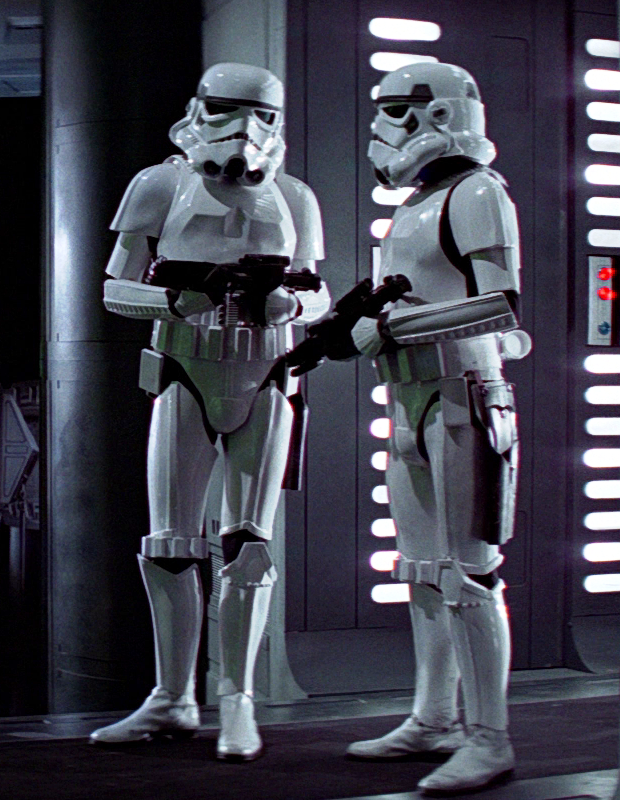
 
With a subtle gesture, you touch the mind of your target and insert an emotion or thought.

"Do you know what's going on?"
"Maybe it's another drill."

You can use the Force to influence a target’s emotional state or subtly guide their thoughts. Make a ranged attack against the target. If you succeed, the target must succeed a Will resistance check (DC 10 + your ranks in Influence) to resist your sway. If their resistance check fails, the target becomes impaired (failure by one degree), disabled (failure by two degrees), or incapacitated (failure by three or more degrees).

The target makes a Will resistance check at the end of each turn to break your influence and recover from the first two conditions. 

Note: Depending on the emotions you choose to apply or the thoughts inserted in the target’s mind the gamemaster may allow slightly different effects. For example, if influenced to feel anger or love the target may behave as though controlled.

Note: Although this power is not inherently attributed to either to the Dark Side or the Light Side, influencing the target to feel a negative emotion is a questionably evil act. A practitioner of the light side must consider the possibility that the target will themselves touch the Dark Side as a result of either emotional or mental manipulation. By contrast, some positive emotions may be unavailable to practitioners of the Dark Side, or at least the resulting influence may become twisted to malignancy.


Misdirection (Universal Force Power)

◊Descriptors – auditory, the Force, illusion, mental, visual
◊Effect – Illusion • 1 point per rank

Misdirection (subtle limited independent resistible Illusion)

◊Modifiers – independent: -1/rank, limited: -1/rank, resistible: -1/rank, subtle 1 flat point
◊Action – standard
◊Range – perception
◊Duration – sustained
◊Results – target sees and hears what you wish
◊Resist –Will

Description

By manipulating the Living Force, you can create images or sounds perceptible only to your target.

“What was that?”

If the target fails a Will resistance check (DC 10 + your ranks in Misdirection) you overcome the target’s visual and auditory senses causing them to see and hear what you wish.

To the target, the effect seems to occupy an area with a maximum volume rank equal to your Misdirection ranks.

The target does not receive checks to recognize this effect as illusory until they interact with it in some fashion. A successful Insight check (DC 10 + Misdirection ranks) reveals it as false. A failed check means the character does not notice anything amiss. A character faced with clear proof an illusion isn’t real needs no Insight check.

Maintaining an active illusion (such as a fighting creature) requires you take a standard action each round, but maintaining a static illusion (one that doesn’t move or interact) requires only a free action.

Senses with the Counters Illusion effect (see Senses) automatically detect illusions. If another character is able to accurately perceive what the target perceives (through mind reading or a description from the target) and clearly indicates to the target that what they perceive a mere illusion, they gain another Insight check with a +5 circumstance bonus.

Circumstances may grant additional modifiers to the Insight check to uncover an illusion, depending on how convincing it is.

Note: As a mental effect, targets lacking a mind (such as an automaton or recording device) cannot be affected by this ability. As with other effects which influence the mind of a subject, Light Side practitioners must use care with what they cause a subject to perceive. An illusion that would (if believed) generate suffering, such as the death of a loved one, will likely earn the user one or more Dark Side points.


Saturday, April 2, 2016

Universal Force Powers: Foresee, Lesser Battle Meditation, Telekinesis


Battle Meditation, Lesser (Universal Force Power)

◊Descriptors – The Force, mental
◊Effect – Enhanced Advantages • 4 points per rank -1

Lesser Battle Meditation (ranged selective area Enhanced Trait)

◊Modifiers – affects only others: +0/rank, area: +1/rank, check required: -1 flat point, concentration: -1/rank, increased range: +1/rank, selective: +1/rank
◊Action – standard
◊Requirement – Expertise: Tactics check
◊Area/Range – 30-foot radius sphere within 100 feet per rank
◊Duration – concentration
◊Results – +1/rank to targets’ attack checks
◊Resist – Dodge (harmless)

Description

Through the Force you are able to enhance the fighting capabilities of your allies.

You can activate Battle Meditation as a standard action by making an Expertise: Tactics check. For each point by which the result exceeds 10, you can use one rank of Battle Meditation. Choose a space you can accurately perceive within range. Allies within 30 feet of the designated space gain a +1 bonus per effective rank on all attack checks.

You can maintain Battle Meditation as a standard action on each of your turns.


Foresee (Universal Force Power)

◊Descriptors – The Force, mental, sense
◊Effect –Precognition • 2 points

Foresee (Senses)

◊Modifiers – activation: -2 flat points, feature: 1 flat point, sustained +0/rank, uncontrolled: -1/rank
◊Action – standard
◊Range – personal
◊Duration –sustained
◊Results – possible vision of the future, +4 to initiative checks

Description

You close your eyes and send your awareness into the Force and sense future possibilities.

Using a standard action, you can extend your awareness into the future and you may receive useful information in the form of a vision. The future is always in motion and if circumstances change, then your vision may not come to pass. When you use this ability, the gamemaster determines if you have a vision and then chooses what information to impart. Your visions may be obscure and cryptic, and therefore open to interpretation. To notice any detailed information present in your vision, you will need to succeed a Perception skill check.

You must focus inward to attempt to receive a vision and are unaware of the present while doing so. If a vision is received, you can view it as long as you like (or until it plays itself out).

As long as you use this ability regularly, you also receive a +4 bonus on initiative checks.


Telekinesis (Universal Force Power)
 
◊Descriptors – The Force, mental, telekinetic
◊Effect – Move Object • 2 points per rank

Telekinesis (Move Object)

◊Modifiers – check required: -1 flat point, subtle: 1 flat point
◊Action – standard
◊Requirement – Ranged Combat: Throwing check
◊Range – S/M/L 25/50/100 feet per rank
◊Duration –sustained (see text)
◊Results – (crude) manipulation of objects at range
◊Resist – none (inanimate), Strength or Dodge

Description

Reaching out with the Force, you can call an item to your hand or lift and hurl objects or even people.

You can lift or manipulate objects using the power of the Force.

Make a Ranged Combat: Throwing check. For each point by which the result exceeds 10, you can use one rank of Telekinesis. Your effective Strength for lifting and moving objects with this effect is equal to your effective ranks in Telekinesis. By taking a move action to concentrate you can increase your effective Strength by +1, changing the effect’s duration to Concentration. This is in addition to using extra effort to further increase your rank (see Extra Effort).

You cannot perform tasks of fine manipulation (like untying knots, typing, or manipulating controls) with Telekinesis. Objects thrown into targets as attacks use your power rank as if it were your Strength rank to determine damage and range. Apply a -1 to the distance rank of thrown objects that are not aerodynamic or balanced for throwing or -2 for very unwieldy objects (like a large uprooted tree). Particularly large objects may count as an area attack when thrown, however an attack roll should still be made and any hit targets receive the usual dodge resistance check (DC 10 + Telekinesis rank) to halve the damage rank.

Telekinesis cannot inflict damage directly; you can’t “punch” or “crush” objects with it. You can use it to make disarm, grab, and trip attacks (see Action & Adventure for details). You can also lift and throw other characters. You must successfully grab a character with Telekinesis first. If successful, you can throw the target as a free action to simply fling them away. If you wish to throw the grabbed target into another target, you must use a standard action (on your following turn). All thrown characters should be considered unbalanced and non-aerodynamic objects.


Tuesday, March 29, 2016

The Dark Side


The Dark Side of the Force

The Dark Side is one aspect of the Force which both hungers for and empowers ignorance, passion, and strife. Acting on negative emotions engenders comparable responses from all but the most enlightened beings. Thus a single act of aggression can have the consequence of producing a reactionary response many times over, first on the target or targets of the initial act and then on all of those affected in collateral fashion. Even if the original action is never repeated by that individual, the consequence of their choice ripples throughout the galaxy, touching many lives in its wake and often returning to revisit itself upon its maker. Animosity, despair, selfishness, and violent belligerence all create a proliferation of the darkness both within and without.

The chill of the Dark Side never leaves the hearts of those it has touched. Even those who renounce the dark and tread the light path thereafter are unable escape the long shadow it forever casts. Such individuals find the specter of doubt haunting every choice, forcing careful consideration of their motives lest they have been colored by their past experiences. Indeed, these beings often see the hand of the Dark Side asserting itself in their lives and in the galaxy around them. Sometimes, this is simply personal anxiety but the Dark Side can exploit its servants to bring any of those it has touched to the crossroads of temptation once more.

This truth often creates a perpetual cycle which draws one’s spirit further and further into a shroud of gloom. For some, escape is impossible even after taking the first step in that direction. The Jedi Order believed that those who started this journey would be subjugated by the evil within and that their fall, however incremental, was also inevitable and irreversible.

Dark Side Points

Dark Side points represent a character’s personal imbalance as a result of behaving in a manner that is arbitrary, cowardly, reckless, or self-indulgent. Not all such acts are certain to corrupt the character and draw them within the embrace of the Dark Side but those who reach out to it find hewing to the light more and more difficult.

The gamemaster decides what actions will result in gaining one or more Dark Side points. Certain types of actions, like killing in anger, yield at least one Dark Side point. Other actions have the potential to accrue a Dark Side point. These acts fall within a gray area between virtue and vice offering a chance for characters to take the action, but resist the call of the Dark Side. While this may appear to allow characters the opportunity to behave in morally questionable ways without consequence, it creates a realistic temptation and encourages players (or the characters they portray) who are intrigued by the Dark Side to take a chance. The odds indicate that the character will acquire a Dark Side point sooner or later and once that happens, the Dark Side will actively tempt and pursue them.

All player characters should track Dark Side points, regardless of whether they are, or can become Force-sensitive unless the gamemaster deems it unnecessary.


Accumulation of Dark Side Points

The following types of actions always result in the acquisition of a Dark Side point: Inflicting pain or suffering for their own sake; malicious killing; using a Dark Side power to inflict harm; using any Force power in anger. All of these activities serve only to empower the Dark Side and create a parasitic relationship between it and the character performing any such act, regardless of how the character may try to justify their wrongdoing. These deeds should be considered objectively evil within the context of the campaign.

Some acts are more ambiguous and the gamemaster should consider the situation before deciding whether to award a Dark Side point immediately or to allow a resistance check. The following actions all carry the risk of bringing the character closer to the Dark Side: Executing one who is guilty of wrongdoing but is currently asleep, bound, dying, incapacitated, paralyzed or otherwise both defenseless and unaware (see Conditions); using any Force power to inflict disproportionate harm on a living being.

Other actions may require a resistance check to avoid gaining a Dark Side point if the act: causes excessive harm; is chosen because of the person’s anger or fear; or is both harmful and an expression of hate, jealousy, spite, vanity, or vengeance. All of these acts are questionably evil within the context of the campaign.

Resisting the Dark Side

If the gamemaster decides that a resistance check should be allowed to avoid earning a Dark Side point, the character makes a Will check. The gamemaster can choose one of the following options when setting the difficulty class of a Dark Side resistance check.

                                •DC 10 + half the series power level
                                •DC 10 + the character’s Will defense

The first option encourages strong willed individuals to be tempted to commit questionable acts. The difficulty can be raised if the character is compounding their transgressions and graded checks can be used in cases where the character might acquire multiple Dark Side points from one action. This is a reasonable campaign choice given examples like Count Dooku or Quinlan Vos. Such characters may believe that they can enter those doors opened by the Dark Side of the Force without losing sight of their nobler ends. Inevitably, these characters will acquire one or more Dark Side points if they continue to find the risk acceptable. Gamemasters should heighten the temptations that befall such characters by placing them in more and more situations where the most expedient options also happen include a cost in the form of more Dark Side points.

All the same, resisting the Dark Side is part of internal struggle. The alternative option makes use of the 55% rule and thus all characters (regardless of how their character points have been spent) are equally likely to resist or fall to the Dark Side. This option means that truly well intentioned characters must avoid choices that would cause them to risk gaining Dark Side points. Players will be less likely to accept a Dark Side point or take a chance on a resistance check, unless they want to play a conflicted character and don’t mind if the character becomes corrupted.

Calling on the Dark Side


The Dark Side can only corrupt those who allow it to touch them by their own choice. If a character has never acquired a Dark Side point (recorded on the character sheet as “–” or “nil”) the gamemaster will not specifically manipulate circumstances to encourage that character to make an evil choice and the option to call upon the Dark Side does not exist for that character.

Any character with 0 or more Dark Side points has reached out to the Dark Side at one time or another and it reaches back. This may be in blatant and clumsy ways or the Dark Side may seem to manipulate events with diabolic subtlety where one difficult decision leads to another and another, each offering an easy escape (just this once) or a promise of further hardship. If the character has had but few transgressions or otherwise seems resistant to corruption the Dark Side will tend to exert influence elsewhere but will seize on any momentary weakness the character displays.

These characters, even those who don’t believe in the Force, can call on the Dark Side. Characters without Force sensitivity or those who don’t believe in or know about the Force or the Dark Side only know that, in this moment, they are willing to do whatever it takes to succeed. Calling on the Dark Side requires a check and immediately earns the character one Dark Side point. The gamemaster decides what trait the player can use for this check and may allow only one option or a choice of several. If a ‘flat’ option is desired, a good choice is to have characters roll the better of Awareness or Presence. Other options include Will, skills such as Deception, Insight, Intimidation, Perception, Persuasion or certain Expertise skills, or a Power check.

In any case, the base difficulty class of calling on the Dark Side is average (DC 10) except as noted below:

        •Add +10 to the difficulty if the action is not intended to cause harm
        •Add +5 to the difficulty each time the character calls upon the Dark Side during the course the adventure
        •Force-sensitives have a base DC of easy (DC 5)
       
       
If the check is successful, the character gains their choice of any one of the benefits of extra effort without causing fatigue. For every degree of success on this check, the character can choose to gain another of the listed benefits, even stacking two or more of the same type of benefit! The character gains another Dark Side point for each additional benefit taken. If the character also uses extra effort on the same turn, they gain another Dark Side point (and suffer the usual cost) and if they possess and use the Extraordinary Effort advantage at the same time, they gain yet another Dark Side point. 

The Temptation of the Dark Side

When a character possesses any number of Dark Side points (even “0”), they are open to the corrupting nature of the Dark Side. In addition to being able to call upon the Dark Side, these characters can choose to take ranks in powers with the Dark Side descriptor and use extra effort (or spend a victory point) to gain the use of a power with the Dark Side descriptor as an alternate effect of any power with the Force descriptor unless that power has the Light Side descriptor.

Such characters can also be actively pulled towards the Dark Side. While the gamemaster should consciously design encounters to give these characters a choice between good and evil on a regular basis (perhaps once every two or three adventures), temptation is an active engagement with the player and should happen only when dramatically appropriate.

First, there should be a reason why the Dark Side is compelled to tempt the character. A character experiencing a sudden growth in power or prominence might be tempted to abuse their good fortune while a character poised to defeat a servant of the Dark Side may be tempted as a way of replacing that servant, if necessary. The Dark Side has no loyalty and only craves to replace power with more power.

The gamemaster should then offer a victory point to the character in exchange for taking an action that may result in acquiring a Dark Side point. For example, the gamemaster may say “Her diplomatic immunity means she’ll never face justice for her crimes. If you let her live will you be there to stop her next time? Why not kill her now…? You can earn a victory point if you do.” Usually the temptation should begin with a questionable act; one that allows a resistance check. This stage of temptation functions like a psychological complication; the hero can choose to follow the suggested action and gain an immediate reward. This should be an apparent win-win option; do something that helps you and you will be rewarded. If the player carries out the proposed deed, they gain the victory point (and can use it immediately). If the act was questionably evil, they should make a resistance check to avoid gaining a dark side point.

Regardless of the player’s decision, the Dark Side continues to target the character. After the initial temptation, the gamemaster should inform the player that while they are tempted by the Dark Side, they gain a +5 bonus when they make a check to call on the Dark Side and an additional cumulative +5 bonus if they successfully called upon the Dark Side during their previous turn. This allows a tempted character to call upon the Dark Side in rapid succession without increasing the difficulty of the check!

The temptation should continue until one of the following conditions is met: It becomes clear that the character intends to remain steadfast in denying the Dark Side; the Dark Side has no more use for the character; or the character falls to the Dark Side completely.

The Corruption of the Dark Side

Conflicted Characters

The power the Dark Side offers comes with a cost. Early on, the Dark Side is seductive in that it offers its boons and asks nothing in return. As a character accumulates Dark Side points however, the true nature of the Dark Side begins to assert itself. The first sign of this malignance is usually a new complication, typically psychological in nature such as addiction, hatred, obsession, phobia, prejudice or temper. When the player chooses to receive a victory point and roleplay the new complication any actions the character takes as a direct result of that complication does not earn the character any Dark Side points. The exception to this is if the character, as specified by the player, feels no remorse for their actions or if the character chooses to use any options that would earn Dark Side points (such as using a Dark Side power to inflict harm or using any Force Power in anger) while taking the action suggested by their complication.

The frequency with which a Dark Side complication comes into play should depend on the number of Dark Side points the character possesses. A good guideline is one time per Dark Side point during the course of a particular story arc or every two or three game sessions. In some cases it may make sense for a character to acquire multiple Dark Side complications, particularly as the number of Dark Side points they possess increases, however this should not add to the total number of times that any of these complication come into play.

When a character accumulates between 6 and 10 Dark Side points, he or she becomes conflicted. At this stage of corruption, the character gains the following circumstance modifiers:

        •+2 circumstance bonus on all checks made while employing a power with the Dark Side descriptor
        •+2 circumstance bonus on checks to call on the Dark Side
        •-5 circumstance penalty on any check made while using a power with the Light Side descriptor
        •-5 circumstance penalty on resistance checks to avoid earning a dark side point
        •-5 circumstance penalty on resistance checks to resist or overcome any effect or skill that relies on negative emotions (anger, fear, hatred, guilt, sadness and so on)

Dark Characters

When a character acquires 11 or more Dark Side points, he or she becomes dark. These characters have all of the same bonuses and penalties as conflicted characters however the Dark Side begins to fundamentally alter the character’s demeanor and outlook. A dark character’s motivation should be examined and the gamemaster should help the player indentify any heroic motivation that is no longer consistent with the character’s new nature. Specific motivations such as doing good, justice and responsibility should either be suppressed or intentionally warped to fit an unbalanced mind.

For example, the character may express their desire to do good by waging a personal war on slavery. Although the character’s goal may remain noble, their methodology should betray the influence of the Dark Side. Perhaps the character thinks it’s permissible to torture a slaver to get information or even simply to punish them. Maybe the character plans to destroy a cantina where slavers are known to gather. What matter if a few of the patrons are not involved in the trade? Surely they are guilty of some other crime. At the very least they should know what kind of villainous scum they rub elbows with.

When a dark character’s motivation comes into play it does not earn the player any victory points, however the player can choose to spend a victory point (if they have any) to resist the compulsions of the Dark Side. Essentially, a dark character must roleplay their new nature or they must pay a premium to control themselves. In one sense, the Dark Side motivation becomes a victory point ‘tax’. If the player has no victory points but does not want act as the Dark Side commands, have the player make a Will resistance check with a DC of 10 + the number of Dark Side points the character has earned. Each time this resistance is successful, the character acts as the player wishes, but the player must record “-1 Victory Points” on their character sheet. The next time the character’s victory points refresh, they start at 0 until the player has “paid off” all of the negative victory points accumulated this way.

Another aspect of dark characters that changes is how they are awarded Dark Side points. Dark characters are evil within the context of the campaign and using powers with the Dark Side descriptor or fueling their actions with hate and rage is a common occurrence. There is little purpose in tracking Dark Side points for these acts as dark characters perform them with casual nonchalance. These characters only gain Dark Side points in the following circumstances:

        •Actions taken as a result of their dark motivation(s)
        •Directly influencing another character to earn a Dark Side point
        •Heinously evil actions (causing wide-ranging and lasting anguish; mass slaughter of innocents)

Finally, dark characters can gain victory points in two additional ways:

        •Directly causing another character to become conflicted or dark
        •Directly creating a new source of heinous evil (designing or constructing a super-weapon; training an apprentice to become an agent of evil)


Even if dark characters are allowed they should eventually be redeemed or removed from play upon being consumed by the Dark Side unless the campaign centers around Dark Side play. Characters should be considered consumed by the Dark Side when they have earned 20 Dark Side points.


Redemption

Characters wishing to cleanse themselves of the Dark Side can do so through adherence to the Jedi Code, atonement, and restraint.

Adherence to the Jedi Code requires that the character know it. If the character is not a Jedi or does not know one it is impossible to remove Dark Side points this way. Following the rise of the Empire, knowledge of the entirety of the code is lost, but some characters and organizations are versed in portions of it. As long as the character knows the mantra of the code and makes a serious effort to follow it, adherence is possible.

Characters seeking atonement must attempt to take direct action to redress any wrongs they may have done. They must also follow the rule of law and seek peace (unless doing so creates undue suffering), and must act to assist others to do these things whenever possible. The character need to throw their life away recklessly in the pursuit of these things, in fact to do so would likely empower the Dark Side, but they must take opportunities to help others when it is within their power to do so.

In essence, adherence and atonement become secondary motivations (see Motivations). Adherence is similar to having honor as a complication (see Complications) while atonement incorporates elements of doing good, justice, responsibility and occasionally patriotism. Whenever the character could gain a victory point by acting heroically or playing out their adherence or desire for atonement, the player may remove one Dark Side point instead.

Restraint involves refraining from any action with the potential to earn a Dark Side point, whether or not a resistance check is allowed and regardless of whether the character is currently conflicted or dark. Therefore, when a conflicted character acts in accordance with a Dark Side complication, they have failed to show restraint even though no Dark Side point is earned. Likewise, a dark character who uses a Dark Side power has also failed in showing restraint. Showing restraint for a period of time as chosen by the gamemaster absolves the character of one Dark Side point. One week of restraint is standard, however if events are moving more quickly or more slowly, another time frame should be considered. In any case, the opportunity to remove a Dark Side point this way should come up no more than once for every two game sessions.

Lasting Torment

Characters who embrace the Dark Side to the point of becoming conflicted or dark but then later spurn the Dark Side’s gifts seem to earn the galaxy’s spite. Even if the character experiences personal success, misfortune slowly hedges in around them and those they form attachments with. These characters should feel the weight of their past burdening their thoughts. The further removed from the darkness they become, the greater does the guilt, remorse and shame crush down upon their spirit.

At times, giving in to the Dark Side may seem to promise an end to or reversal of this trend and when tempting the player, the gamemaster should indicate as much. This should be similar to using a victory point to gain inspiration (see Victory Points) except it costs the character nothing. The suggested course of action should carry the risk of earning a Dark Side point, however (like exploiting an enemy’s weakness to a Dark Side power or using blackmail or murder to eliminate a rival).

These characters may choose to live a vagabond lifestyle lest their presence should call the Dark Side and bring ruin to the lives that surround them. The redeemed must strictly adhere to the Jedi way of avoiding attachments. The Dark Side will first endeavor to tempt them back with opportunities to improve the fortunes of their loved ones. Later, the agents of evil will (knowingly or otherwise) beget woe upon all whom the redeemed hold dear. Some redeemed choose exile rather than risk the well-being of others.